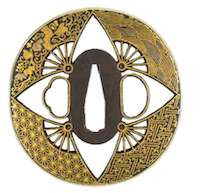
The appeal and function of the tsuba can be distilled into the following three points:
1. Its role as a “shield” protecting the hand

Its primary purpose is practicality.
Defense: Prevents the opponent's blade from slipping and cutting the user's hand.
Weight adjustment: Shifts the balance (center of gravity) of the entire sword toward the grip, making it easier to handle.
2. Fashion adorning the samurai's “soul”

From the Edo period onward, tsuba became so artistically refined they were called “jewels for the waist.”
Self-expression: They served as a canvas reflecting the owner's ideology, beliefs, and seasonal sensibilities.
Status: Exquisite metalwork by master craftsmen also signified a samurai's education and wealth.
3. Craftsmanship beauty encapsulated in a tiny universe

Within circles of iron or copper measuring just a few centimeters lies Japan's unique technology. Its greatest charm lies in the coexistence of rugged “functional beauty” and splendid “artistic beauty.”
The beauty of openwork: The clean-cut elegance of carved space.
Inlay (Zogan): Overwhelming detail achieved by embedding gold or silver.
The tsuba (guard) of Japanese swords has evolved over time, shifting from a focus on “practicality” to “artistic value,” and can be broadly classified into the following three periods:
1. Before the Muromachi period (the era of actual warfare)
Primarily designed for battlefield utility, characterized by simple, robust designs.
Blacksmith Tsuba: Tsuba made by swordsmiths using leftover iron from forging blades. Characterized by rugged, simple designs.

Armor Smith Tsuba: Tsuba crafted by armor makers. Thin yet resilient, featuring simple openwork patterns like cherry blossoms or plum blossoms.

Ōnin Tsuba: Emerged around the time of the Ōnin War. Characterized by early decorative attempts, featuring brass inlay on an iron base.

2. Late Muromachi to Momoyama Period (Emergence of Individuality)
Samurai aesthetic sensibilities heightened, leading to the emergence of regional characteristics and renowned tsuba craftsmen.
Owari Tsuba / Kanayama Tsuba: Developed in the Owari region. Characterized by thick, robust, and symmetrical openwork patterns.

Emergence of Master Craftsmen: Historical masters like the Kanaie and Nobuie families flourished, establishing the tsuba as an independent work of art.
3. Edo Period (The Age of Fine Arts and Crafts)
With the advent of peace, tsuba evolved into luxurious crafts symbolizing a samurai's “status” and “fashion.”
Metalwork Tsuba: Alloys like “shakudo” (red copper) and “shibuichi” (a copper-nickel alloy) were used alongside iron, featuring extensive use of high relief carving and vividly colored inlay.

Akasaka Tsuba: Produced in Akasaka, Edo. Characterized by delicate openwork, reflecting Edo trends.

Yagyu Tsuba: Attributed to Yagyu Rensai, these tsuba possess a simple yet robust beauty with unique design aesthetics.

The tsuba is, in a word, “a palm-sized work of art that embodies the samurai's dedication.”
Share:
What should you look at when appreciating a Japanese sword?
How to Care for a Japanese Sword